
Jul 22, 2026Know more about Home Fragrance
Choosing the Right Reed Diffuser Scent Tester: Practical Insights from a Home Fragrance Supplier
Choosing the Right Scent Tester for Reed Diffusers: Practical Insights from the Home Fragrance Industry Introduction: What We Have Learned from Working with Fragrance Brands
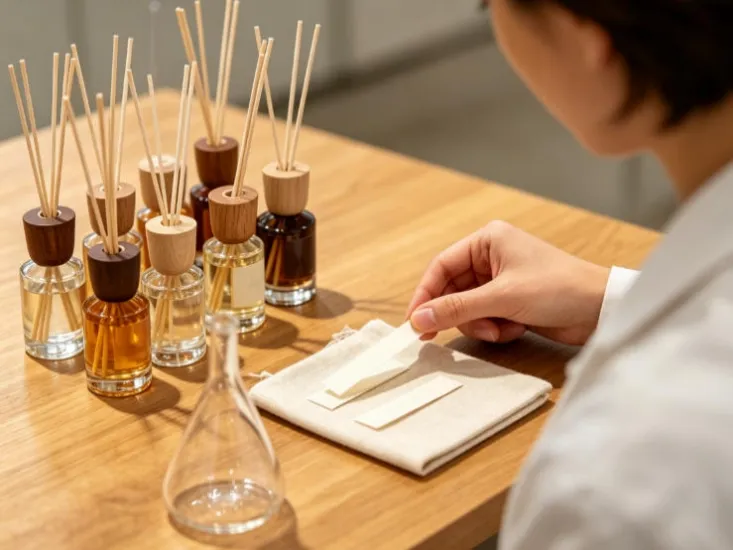
In the home fragrance business, we have found that customers often spend a great deal of time choosing the right bottle, cap, and packaging design. However, when it comes to the final purchasing decision, the fragrance itself usually becomes the most important factor.
In this article, we will share how different scent testing methods are used in real fragrance projects and help brands choose the right option based on their sales environment and product positioning.
A reed diffuser can look beautiful on a shelf, but customers cannot fully understand a fragrance by appearance alone. They want to know whether the scent feels fresh, warm, floral, woody, or suitable for their living space.
This is where scent testers become valuable.
Through years of working with fragrance brands, packaging companies, and home fragrance suppliers, we have seen many different approaches to fragrance testing. Large retailers often need simple and efficient solutions for hundreds of customers every day, while boutique brands usually focus more on creating a premium and memorable experience.
There is no single scent tester that works for every business. The right choice depends on the brand positioning, sales environment, number of fragrances, and customer experience goals.
Why Reed Diffuser Testing Is More Difficult Than It Looks
Many people assume that testing a reed diffuser fragrance is simply opening the bottle and smelling the oil. In reality, professional fragrance testing requires more attention.
When customers test several fragrances in a short period of time, three common problems appear:
- 1. Scent fatigue
The human nose quickly adapts when exposed to many fragrances. After testing several samples, customers may find it difficult to recognize the differences between scents.
- 2. Fragrance cross-contamination
If the same testing tool is used for different fragrances, residual scent can affect the next sample and create inaccurate impressions.
- 3. Retail management challenges
For stores displaying multiple fragrances, testers need to be easy to manage, clean, replace, and organize.
A suitable scent tester helps solve these problems and allows customers to experience each fragrance more clearly.
Different Scent Tester Options Used in the Market
Scent Strip (Fragrance Blotter)
For most retail environments, scent strips remain the simplest and most practical fragrance testing solution.
They are widely used in fragrance stores, exhibitions, trade shows, and multi-brand retail environments because they are affordable, easy to prepare, and convenient for customers.
Many brands customize scent strips with their logo, fragrance name, or product information. This small detail can turn a basic testing tool into part of the overall brand presentation.
The main limitation is that scent strips are designed for short-term sampling rather than permanent display.
Glass Scent Tester
For premium fragrance brands, the testing experience itself becomes part of the brand image.
Glass scent testers provide a more professional and refined way for customers to evaluate fragrances. They are often used in boutique stores, fragrance studios, and showroom environments.
Compared with disposable paper strips, glass testers offer a more controlled smelling experience and allow customers to spend more time understanding different fragrance notes.
The trade-off is maintenance. Reusable glass testers require proper cleaning when changing fragrances.
Porous Scent Stone
Scent stones are often selected by brands that want fragrance testing to become part of the visual display.
Made from porous materials such as ceramic or stone, they absorb fragrance and release it gradually. They are especially suitable for lifestyle stores and decorative fragrance displays.
Because porous materials retain fragrance, they are usually better for fixed single-scent displays rather than frequent fragrance changes.
Fabric Scent Tester
Fabric testers create a more realistic lifestyle experience by showing how fragrance interacts with materials such as cotton or linen.
They are often used by premium home fragrance brands that want customers to imagine the scent in a real home environment.
Mini Sample Vial
Mini sample vials are useful for fragrance sample management and product development.
Each vial can contain one fragrance sample, making it easier for brands, distributors, and buyers to organize multiple scent options.
Reed Diffuser Tester Set
For reed diffuser brands, a dedicated tester set can provide the closest experience to the final product.
By using a small fragrance bottle and matching reeds, customers can understand how the scent develops through the same diffusion method as a finished reed diffuser.
This approach is often used in brand showrooms, flagship stores, and fragrance experience areas.
Here is a reference for different types of scent tester we mentioned above.
Tester | Our observation | Suitable for |
Scent strip | Most practical for daily sampling | Retail |
Glass tester | Better presentation | Luxury brands |
Scent stone | Good for atmosphere display | Lifestyle stores |
Mini vial | Better sample management | Distributors |
Reed diffuser tester set | Closest to final product experience | Brand showroom |
How Brands Should Choose a Scent Tester
Based on our experience, brands usually need to consider three questions:
1. How many fragrances will customers test?
For large collections, scent strips are often the most efficient option.
2. What kind of customer experience does the brand want to create?
Luxury and boutique brands may prefer glass testers or dedicated display sets.
3. How often will fragrances be changed?
Frequently changing displays require easier-to-maintain solutions.
Common Mistakes Brands Make
- Choosing only based on price
The cheapest option is not always the most suitable. A poor testing experience can affect how customers perceive the fragrance.
- Using one tester for multiple scents
Each fragrance should have a dedicated testing method to avoid confusion.
- Ignoring the display environment
A tester used in a supermarket, boutique store, and showroom may require completely different designs.
Beyond Scent Testing: Creating a Complete Reed Diffuser Experience
A successful home fragrance product is not only about the scent. Bottle design, wooden caps, reeds, decorative elements, and testing methods all contribute to the final customer experience.
At KKC, we work with fragrance brands and suppliers to develop complete home fragrance solutions, including reed diffuser components, glass packaging, wooden caps, and customized accessories.
From our experience, the best results usually come when fragrance presentation and product design are considered together from the beginning.
Conclusion
A scent tester may be a small accessory, but it plays an important role in helping customers connect with fragrance products.
Different businesses require different approaches. Whether it is a simple scent strip for high-volume sampling or a customized reed diffuser tester set for a premium showroom, the right solution depends on the brand story and customer experience you want to create.
Need Help Choosing the Right Scent Tester?
Every fragrance project is different.
If you are developing a reed diffuser collection and are not sure which testing method fits your products, contact our team. We can help recommend suitable tester solutions based on your fragrance range, packaging style, and sales channel.